Automated Risk Stratification
Every patient is scored against guideline-based criteria at intake, so high-risk cases are identified proactively instead of discovered mid-workup or on the day of care.
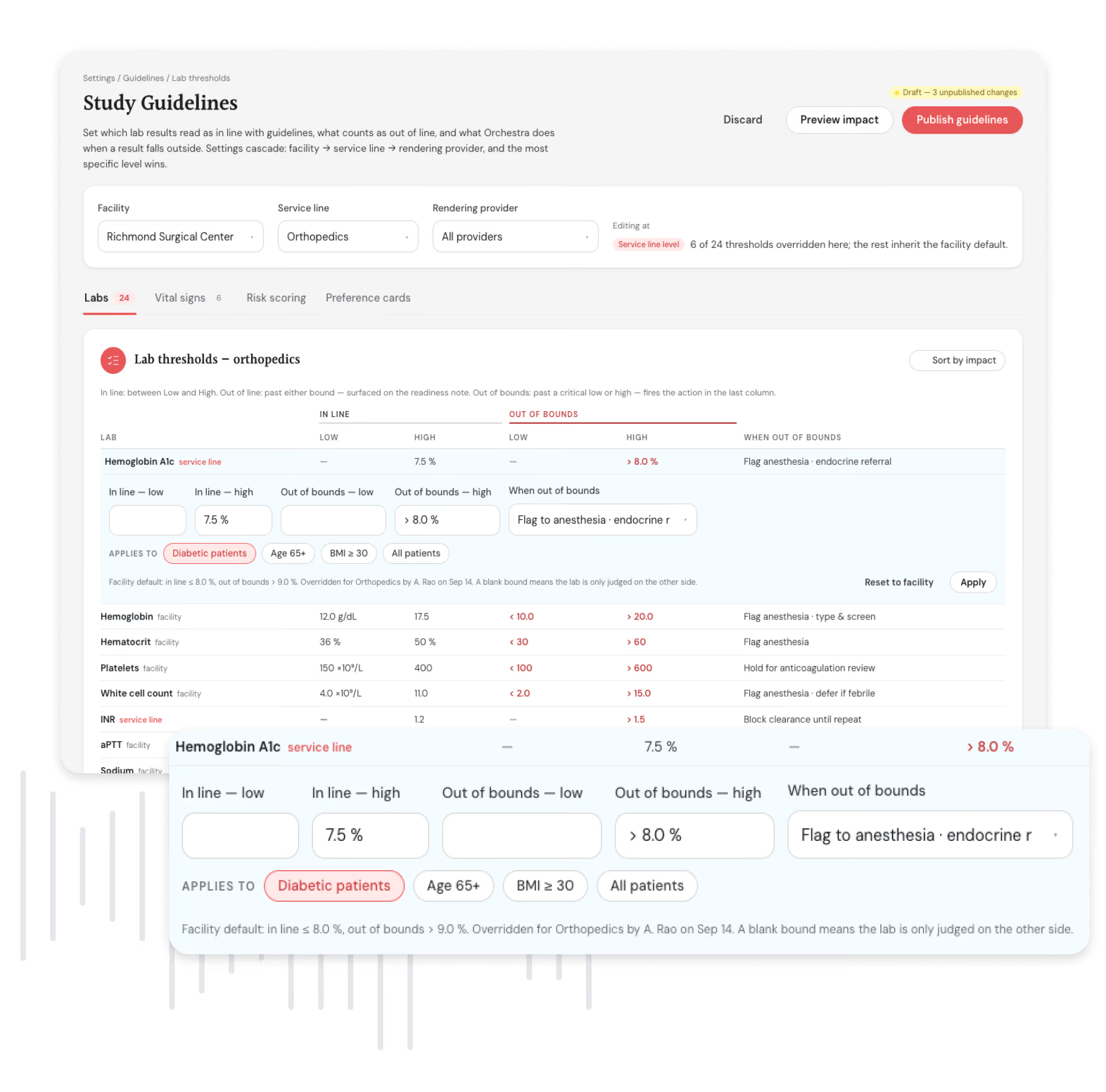
Orchestra's Clinical Risk Analysis applies condition-specific triggers and guideline-based logic to every ingested record to catch risks while there's still time to act.
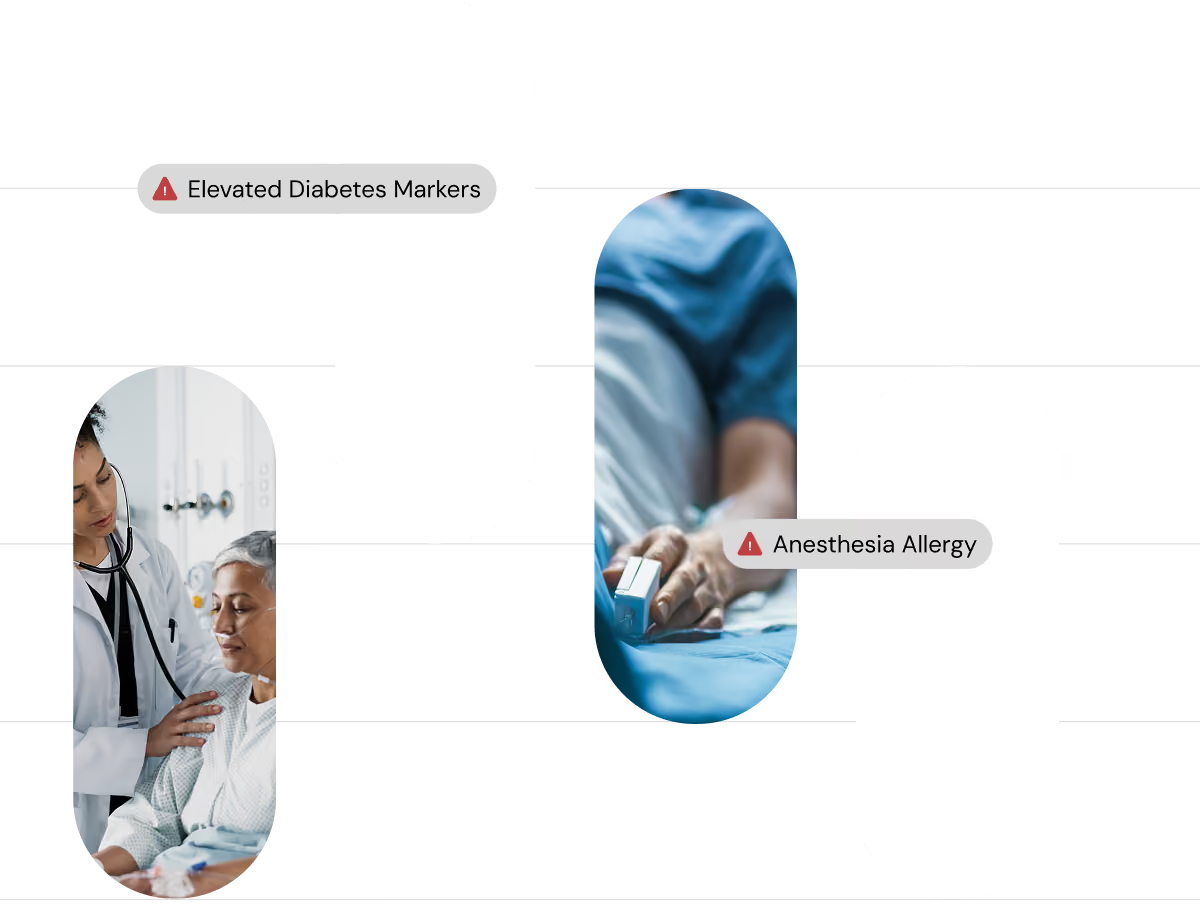
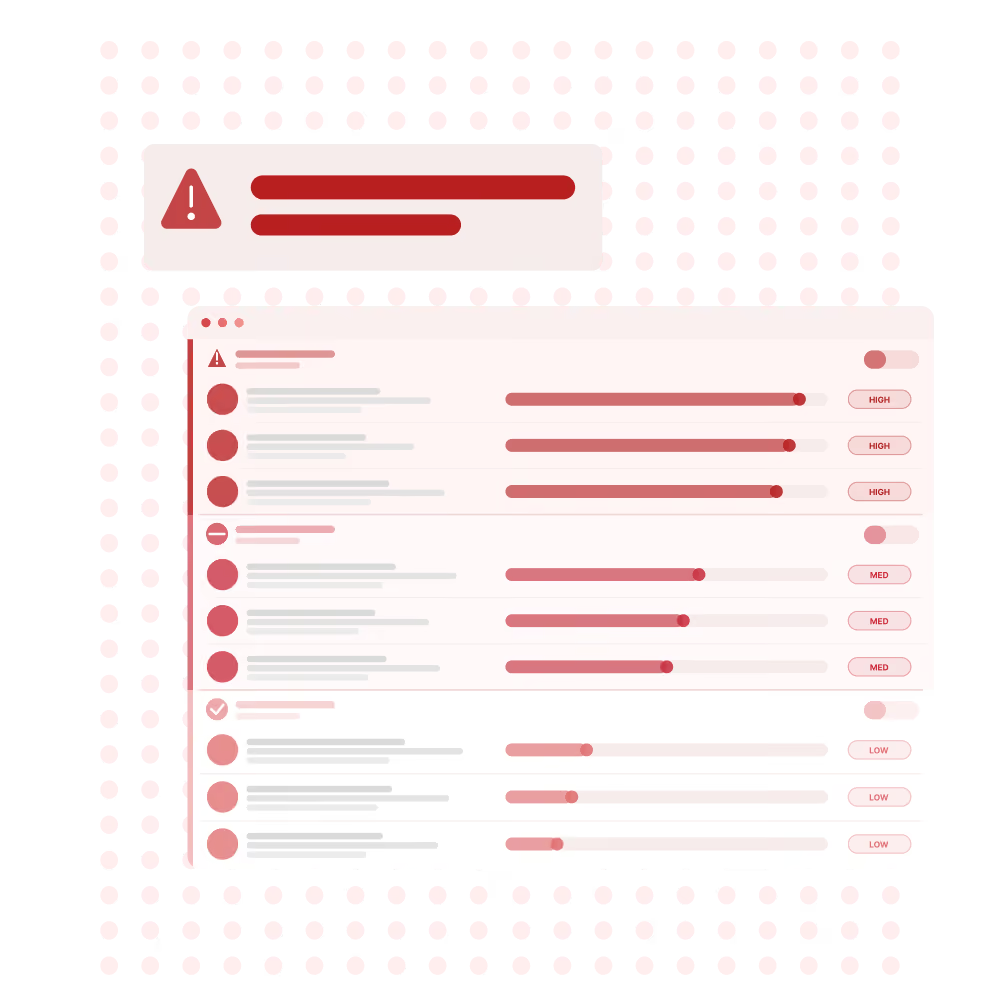
Every patient is scored against guideline-based criteria at intake, so high-risk cases are identified proactively instead of discovered mid-workup or on the day of care.
Structured records are screened for risk signals like elevated diabetes markers, cardiac history, and prior complications, enabling earlier clinical intervention instead of reactive chart chasing.

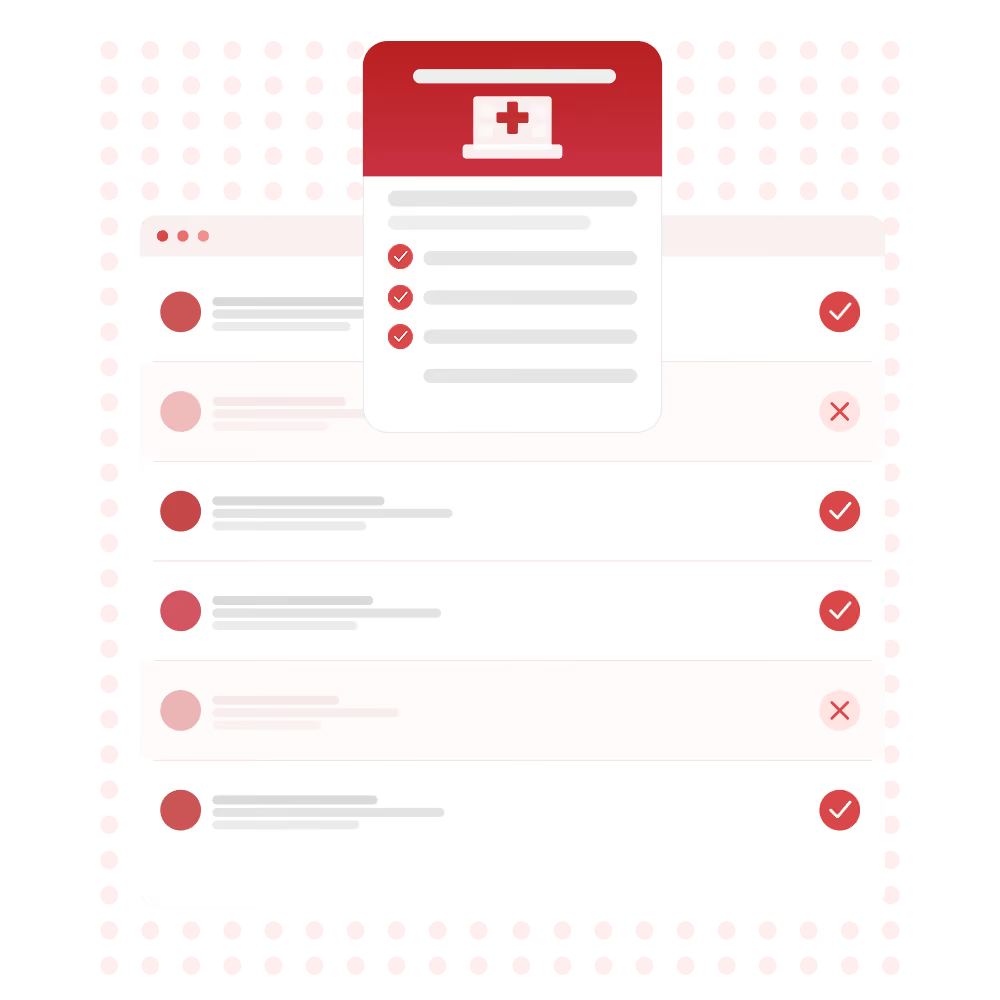
Flags cases where a patient's required level of care exceeds a facility's scope, reducing clawbacks, complications, and med-mal exposure tied to mismatched placements.
Replaces fragmented, conflicting protocols across sites with one automatically applied standard, so requirements are never missed due to confusion over which guideline governs a given case.
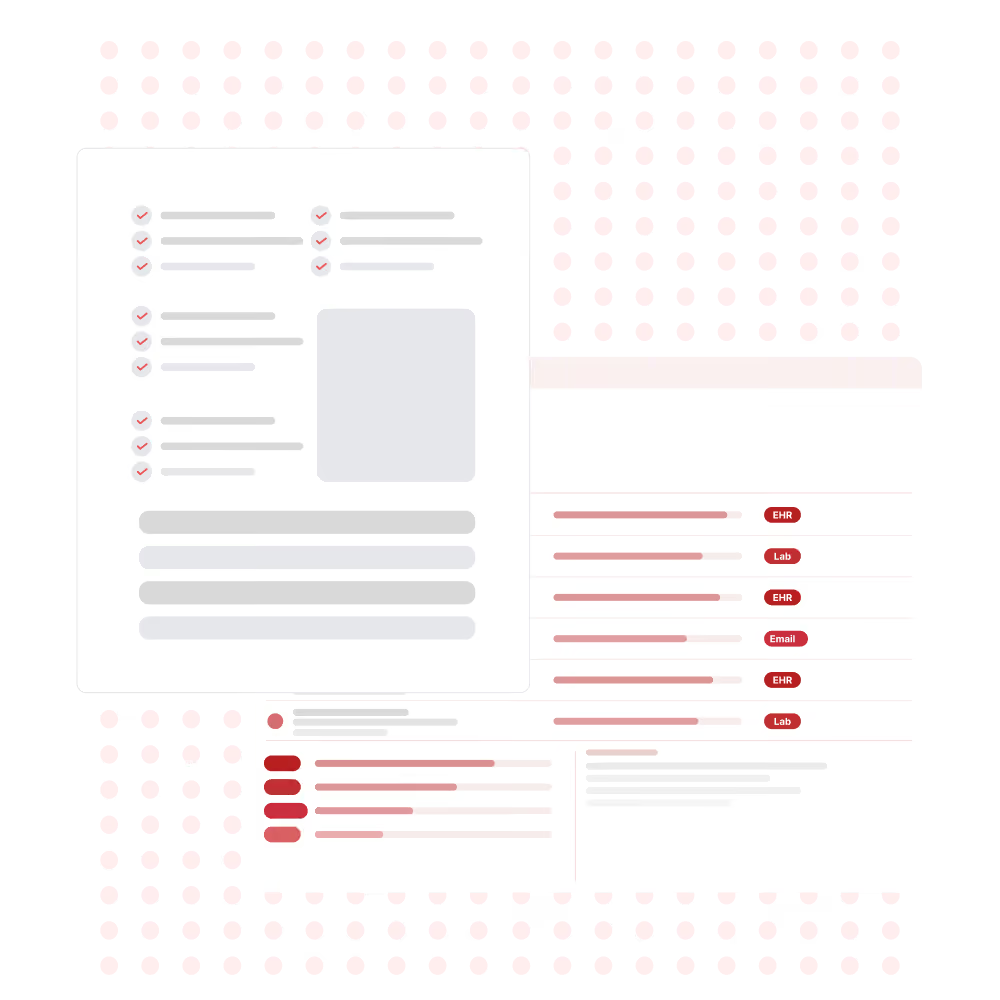
Instead of one generic printout with medication instructions a patient may not even be on, prep instructions reflect each care team's actual preferences. Automating this removes cognitive load for patients and providers, improves adherence, and cuts the operational misses that erode service-line margin.